
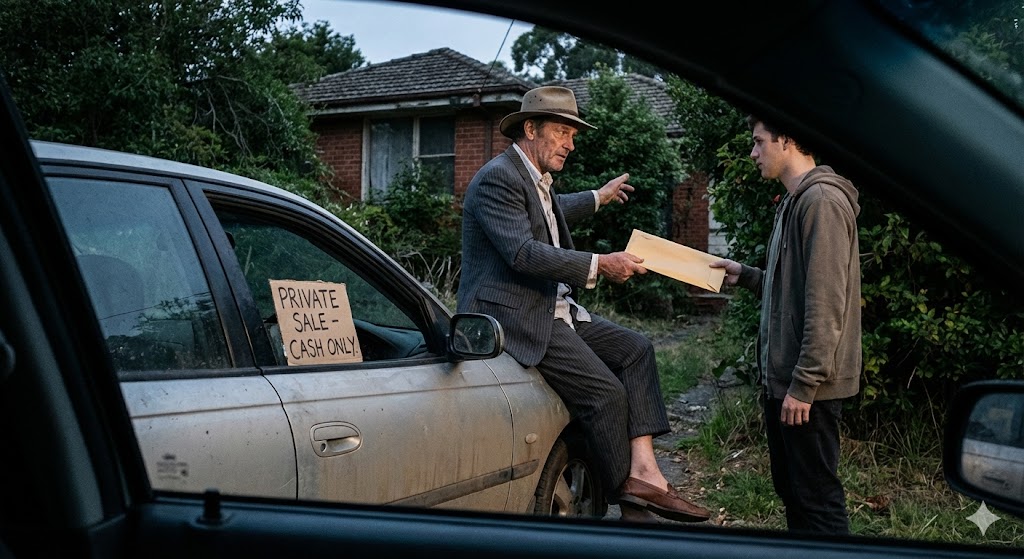
Off Market Property : Gold Coast
 5 min read
 Off Market Property Gold Coast: What Sellers Must Know Before Making a Costly Mistake
What Does Off Market Actually Mean?
Let’s start at the root of the issue. Most agents who promote off market sales use the phrase incorrectly, which leads to confusion and bad decisions by sellers.
According to the Merriam-Webster Dictionary:
Off market means “not available for sale” or “not being marketed or offered publicly.”
By contrast, the Cambridge Dictionary define
On the market as “available to buy or sell.”
🔗 Definition
So, by definition, a property that is for sale cannot be off market.
What agents call “off market” is not off market at all. It is simply no marketing.
No advertising. No reach. No competition. No strategy.
And that choice can be very expensive.
The Financial Cost of Getting It Wrong
With the average Gold Coast house value now sitting between 1.2 and 1.32 million dollars, every percentage point of your final price matters. A poor marketing strategy combined with a weak or inexperienced negotiator can cost between 3 and 10 percent of the final result.
Here is what that loss looks like in real numbers:
- 3 percent loss on a 1.2 million dollar home: 36,000 dollars
- 10 percent loss: 120,000 dollars
- Add commission and marketing costs and the total real world loss jumps into the 50,000 to 150,000 dollar range
When you limit exposure, you limit competition.
When you limit competition, you limit your sale price.
It is that simple.
Why Selling Off Market Works Against You
Sellers are often led to believe that off market sales are exclusive or strategic.
In reality, the only parties that benefit from off market sales are buyers and lazy agents.
Here is the truth:
1. A property cannot achieve maximum potential with minimum exposure.
Real estate is a visibility game. More eyes create more interest. More interest creates competition. Competition creates price growth. Off market selling eliminates all three.
2. You are reducing your buyer pool to a handful of people.
Smart negotiation requires multiple offers. You cannot negotiate strongly with one or two buyers and expect a premium result.
3. You remove the emotional bidding environment.
The strongest prices come when buyers compete. Off market sales remove the arena where that happens.
4. You are handing the advantage to the buyer.
Off market buyers rarely pay above market. Most expect a discount because you are not exposing it properly.
5. It signals low confidence in the property.
Buyers assume that if it is not marketed properly, something must be wrong.
The Impact of Limited Exposure
No marketing means fewer buyers. Fewer buyers means a weaker negotiating position.
When a property is not exposed to the open market, you are voluntarily walking away from the competition that pushes prices up.
Ask yourself:
Would you ever auction something valuable to only a handful of bidders?
Would you ever sell a luxury car by telling only two people it exists?
Property is no different.
Q and A: Hard Questions Every Seller Should Ask Before Going Off Market
Can a property achieve maximum price potential with limited exposure?
No. Maximum price requires maximum competition. You cannot create competition with minimal visibility.
If only a small handful of buyers see my home, how can I be sure the best buyer even saw it?
You cannot. The best buyer may never know your home existed.
If a buyer knows I am selling quietly, what motivates them to pay a premium?
Nothing. Quiet sales encourage bargain hunting, not strong offers.
Would you pay full price for a property that no one else appears to want?
Most buyers will not. They assume something is wrong if it is not publicly marketed.
Is saving on marketing worth risking a loss of 50,000 to 150,000 dollars?
Absolutely not. Proper exposure pays for itself many times over.
Q6. If a property portal like REA can generate tens of thousands of views, why settle for ten private inspections?
Settling for less visibility means settling for less money.
Q7. Who benefits most from off market sales? Me or the buyer?
The buyer. Every time. Lack of competition always favours the buyer.
Q8. Is choosing a quiet, lazy strategy worth potentially sacrificing years of equity?
No selling strategy should risk your financial future.
Q9. Why would a strong agent ever encourage a strategy that guarantees fewer buyers?
A strong agent would not. Only an unskilled or overwhelmed agent prefers the shortcut.
Q10. If the goal is the highest price, why choose the strategy that makes that outcome least likely?
You should not. Premium results always require visibility.
The Myth of the Area Specialist
Sellers are often told they need an area specialist.
Here is the truth: a great agent can achieve a premium result in any suburb.
A high performing agent is defined by skill, strategy, and negotiation ability, not by how many times they have driven through a postcode.
Area knowledge helps.
Professional skill wins.
A skilled negotiator with strong marketing knowledge will outperform an area specialist with weak skills every day of the week.
Why limiting exposure limits your final sale price
The strongest sale prices always come from competition. Competition requires participation.
And participation only happens when the property is accessible to the entire buyer market.
In today’s market, where the median Gold Coast home costs over 1.2 million dollars and lending criteria is stricter than ever, most buyers rely on finance. Finance-approved buyers cannot legally purchase unconditionally at auction. That means auction campaigns exclude a significant portion of willing buyers before the property is even marketed.
Any strategy that limits exposure — whether it is off market selling, auction-only selling, or restricted marketing — will automatically reduce:
- the number of buyers who see the home
- the number who can participate
- the level of competition
- your negotiating power
- your final sale price
If fewer buyers can see it or compete for it, the outcome is weakened from the start.
A property cannot achieve its maximum potential when it begins with a restricted audience.
Final thought
Selling off market is presented as convenient and exclusive.
In reality, it is slow, limiting, and financially dangerous.
You can choose a strategy that exposes your home to the entire buyer market, or one that hides it from most of them.
The more buyers who see your home, the stronger your final price.


